
What the EU announced on 22 October
The EU Delegation announced the EU–Philippines AI Industry Lab at the ECCP’s 2026 AI Forum. It says DOST will establish it as an allied laboratory under the National AI Center for Research and Innovation. The intended audience includes industry, MSMEs and startups.[1]
Plans encompass infrastructure, cloud services, datasets, technical expertise and links to European Digital Innovation Hubs and AI Factories. Energy, health, environment and disaster resilience are among the stated application areas. The release places the initiative within €40 million of broader EU–Philippines digital cooperation; that figure is not a disclosed lab-only budget.[1]
Why the testing model matters
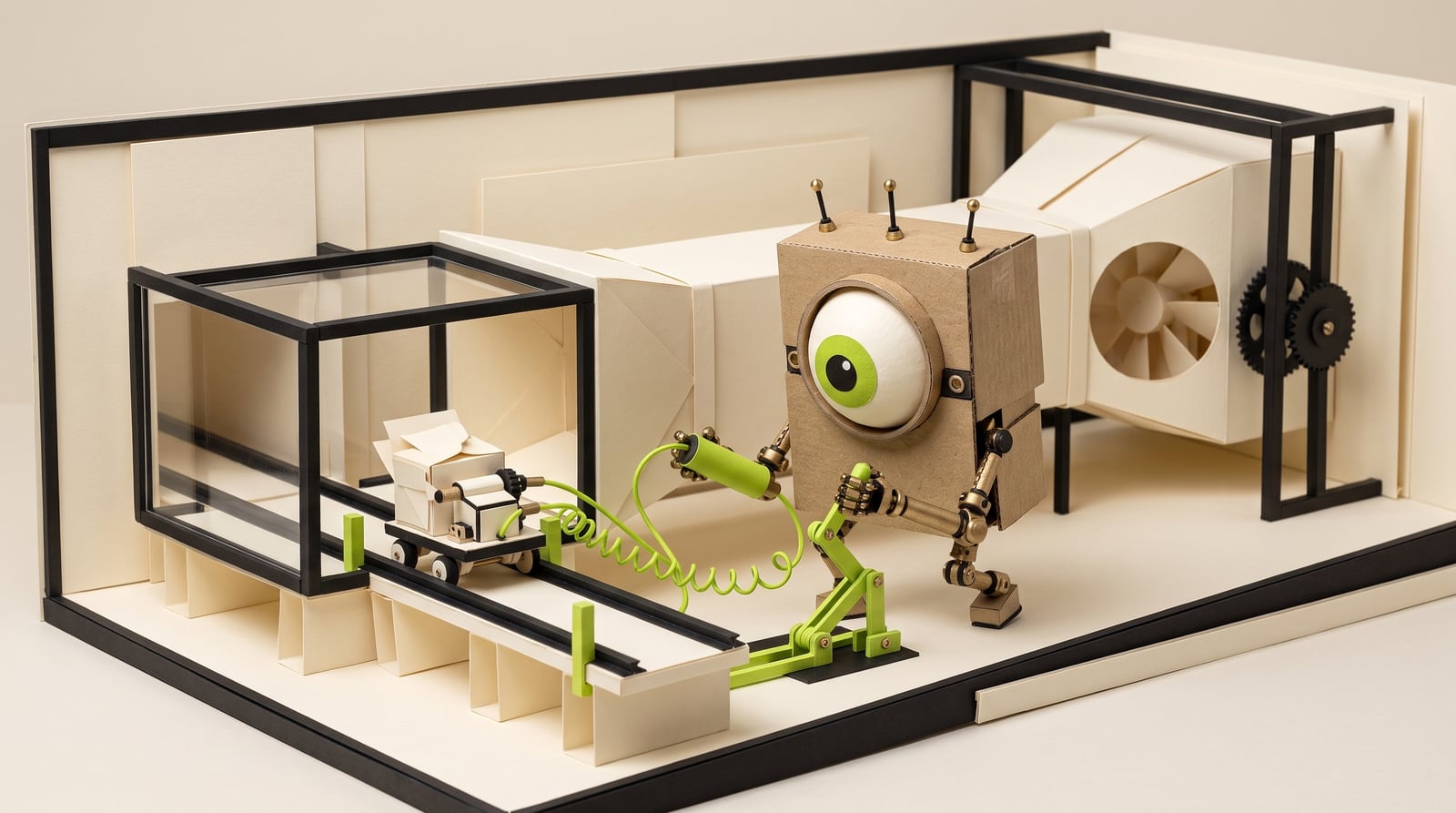
The European Commission describes its Digital Innovation Hubs as providing technical expertise and testing alongside training and financing advice. Test before invest is part of that service model. This explains the European reference point; it does not establish that Philippine applicants receive identical services or funding conditions.[2]
Kooya analysis: the useful shift is from asking whether an AI demonstration looks impressive to asking whether a business should commit to operating it. A bounded test can expose missing data, excessive review work or an integration dependency before those problems become part of a larger purchase.
For a small firm, a worthwhile outcome might be a narrower deployment, a different supplier or a decision to stop. Counting demonstrations alone would miss that value. The test should reduce uncertainty about a consequential choice, rather than merely prove that a model can generate an answer.
Access and operating details still need confirmation
The release reviewed on 25 October does not specify an opening date, application process, service fees or a lab-specific funding allocation. It should not be read as a grant call or a guarantee of free compute.[1]
Kooya analysis: before scheduling work around any proposed laboratory service, request written confirmation of the service owner, eligibility, available capacity and responsibilities. Establish who supplies the data, who conducts the evaluation and who pays for engineering work outside the test environment. Treat a referral or expression of interest as an early step until those terms are clear.
- Eligibility: which entities and use cases can participate?
- Delivery: what resources, staff time and service dates are actually available?
- Commercial terms: what is funded, charged or left to the participant?
- Ownership: who can retain, use and share the resulting code, data and findings?
Prepare a business question that a test can answer
Kooya analysis: begin with one workflow and its current baseline. For an illustrative inventory-planning exercise, record how the existing process handles missing records, unusual demand and staff overrides. Then define what an AI-assisted alternative must improve without making costly errors harder to detect. This is a hypothetical preparation example, not an announced lab project.
Separate development material from the cases used to judge the result. Include difficult examples and state who reviews ambiguous outputs. Record accuracy or usefulness alongside delay, human intervention and total delivery cost. A result measured only on easy cases tells a business little about daily operations.
Write the decision rule before testing: what evidence would support a limited rollout, require another experiment or stop the work? Avoid inventing a universal performance target. The threshold should reflect the workflow’s actual cost of mistakes and the capacity of the people responsible for correcting them.
Use our AI pilot evaluation checklist to turn the business question into evidence you can review.
Plan the transition from experiment to operation
Kooya analysis: a laboratory result should be reproducible outside the demonstration setting. Ask for a record of the model, configuration, test data permissions, evaluation method and limitations. Keep a distinction between results achieved with specialist support and the performance the business can maintain itself.
Estimate recurring infrastructure and model costs, monitoring, security work and human review after the test ends. Agree who responds when the system fails and how the previous process can be restored. Shared testing resources can help assess feasibility; they do not replace operational ownership.
If the test uses sensitive or proprietary information, resolve access, retention and deletion arrangements before transferring it. A public cooperation announcement does not establish permission to upload customer records or confidential business files. These are preparation questions for the eventual service agreement, not claims about the lab’s published rules.
What to watch next
The next useful evidence will be operating documentation: a named delivery team, a service catalogue, eligibility and pricing rules, data terms, and a clear route for enquiries or applications. Subsequent case reports should distinguish experiments completed from systems adopted and explain how outcomes were measured.
Kooya analysis: judge the initiative by whether participants can make better deployment decisions and maintain useful systems after support ends. For now, prepare a small, testable business brief and monitor official updates. This article is source-based news analysis; Kooya does not claim a lab partnership, privileged access or an application-handling role.